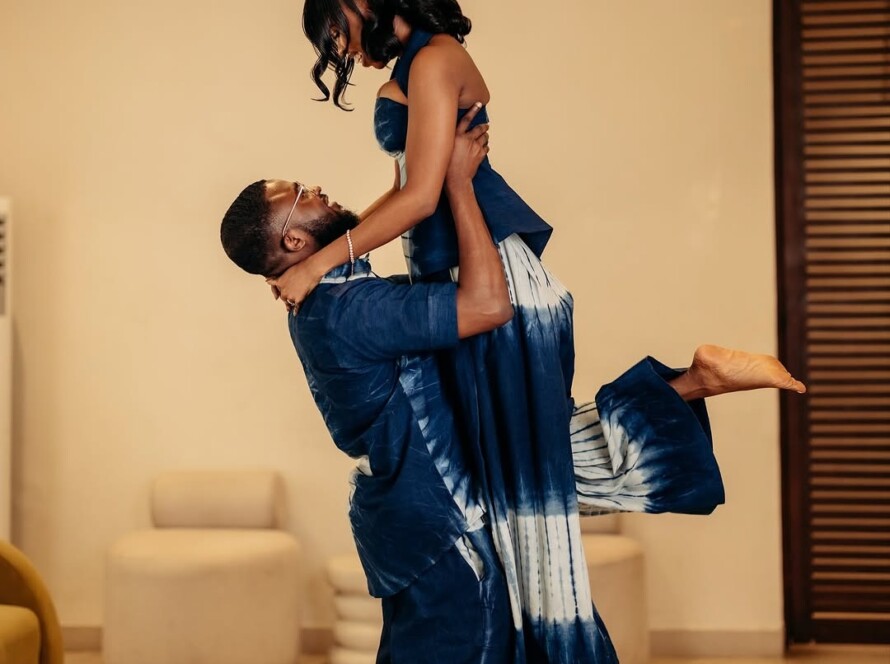
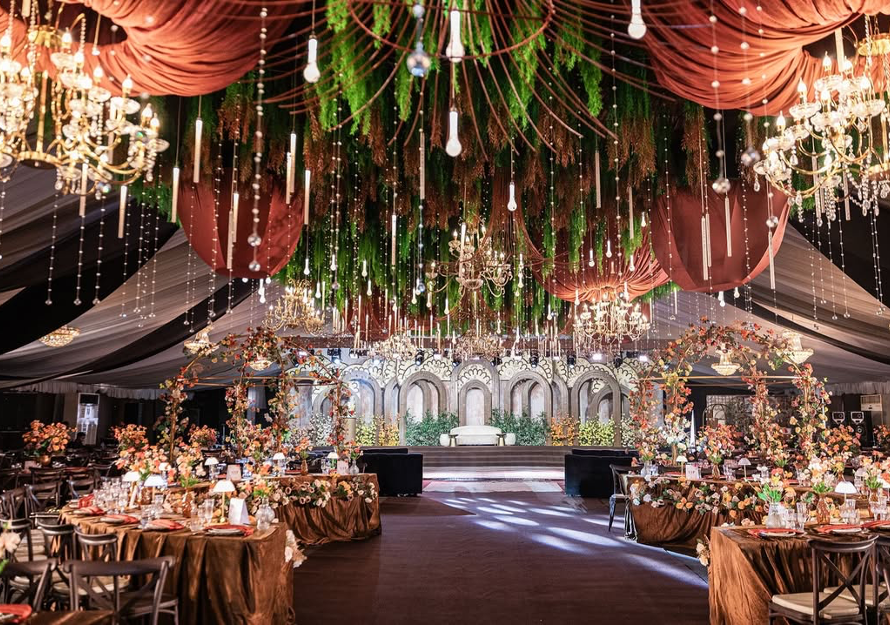
Part 1: Starting with the Couple
If you ask most people how they chose their wedding colours, the answers are usually the same. “We saw it somewhere.”“It looked nice or “It was trending.” And to be honest, that’s how a lot of decisions are made now.
But when you attend enough Yoruba weddings, you start to notice something. Some weddings look beautiful and some feel like everything just cam together naturally and not necessarily more expensive but just intentional. And most times, that difference starts from something as simple as colour.
Before Anything Else, There Is You
Before the fabrics are decided & bought, before the Aso Ebi is announced & before family members start asking questions.. There are two people at the center of it. And somehow, when it comes to colours, that process starts from outside either from saved posts, other weddings or what looked good on someone else.
But colours don’t just live on screens. They sit on you. They move with you.
They show up in every photo, every entrance, every moment. So it makes sense to start there.

The Things You Already Know (But Don’t Think About)
Most people already have an idea of what works for them but they just don’t pause long enough to notice it.
There are colours that you wear without stress.
Colours that don’t need adjusting.
Colours that feel right the moment you put them on and that is not random.
For brides, it might be the difference between a shade that enhances your glow and one that feels like it’s competing with you.
For grooms, it’s often even clearer when the colour sits well, everything else follows. When it doesn’t, it shows.
These things are easy to overlook, but on a day like this, they make a difference.
Then There’s the Both of You
This is where things become more than just personal preference. Because now, it’s not just about what works for one person. It’s about how both of you show up together.
You don’t have to like the same colours. In fact, most couples don’t. One person might naturally lean towards deeper, richer tones. The other might prefer something lighter, softer, easier.
If this part is rushed, the result usually feels slightly off not wrong, but just not fully aligned. But when you take your time here, you start to find a balance by allowing both preferences to exist in a way that makes sense.And when that happens, it shows. Nothing feels like it was added last minute. Nothing looks disconnected

Yoruba Weddings Are Visuals Whether You Plan for It or Not
One thing about Yoruba weddings is that everything is seen. The colours. The combinations. How people show up. How everything blends or doesn’t. Even the smallest details don’t stay small.
Once a colour direction is set, it travels. From the couple…to the Aso Ebi…to the bridal party…to the décor…to the overall atmosphere of the day.That’s why this decision carries more weight than people expect. Because when the starting point is not clear, everything that follows starts to feel like guesswork.
Finding a Direction That Feels Like You
At some point, it stops being about picking colours randomly and starts becoming about recognising what feels natural to you as a couple.For some, it leans towards something soft and understated.
For others, it’s deeper, richer, more expressive. You don’t always need to name it immediately, but you can usually feel it.
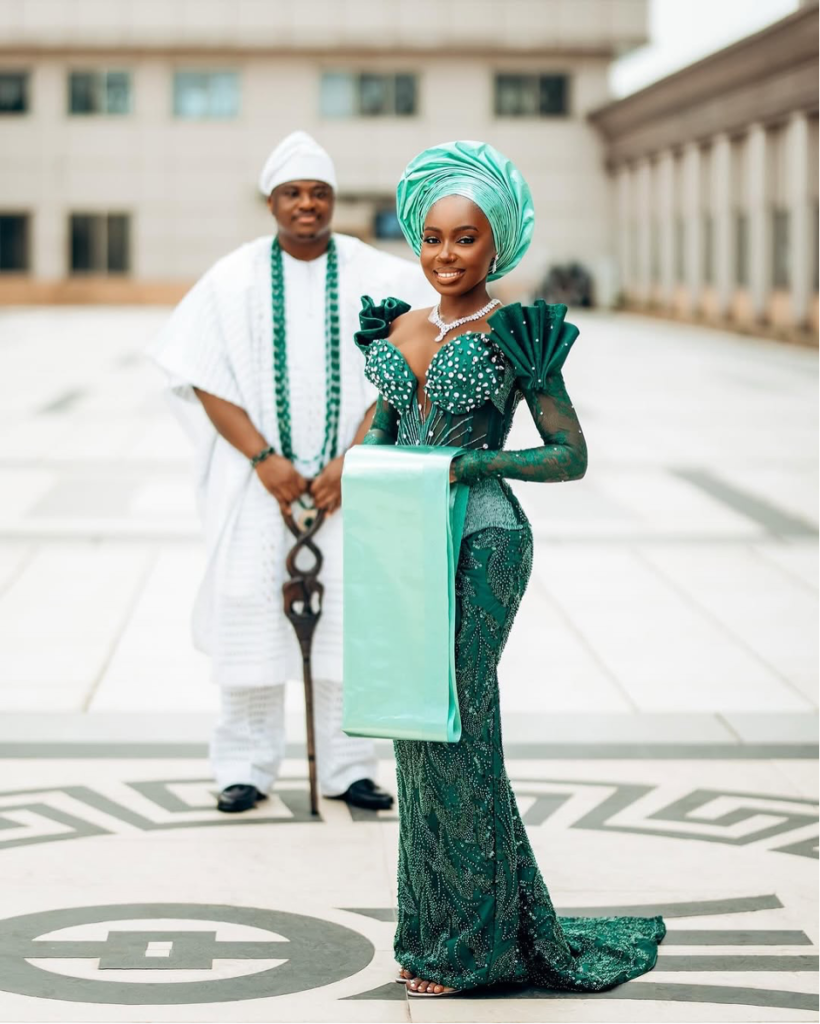
Still, if you’re trying to make sense of it, most couples tend to fall somewhere within these directions:
For couples who prefer something soft and effortless,
champagne, blush, soft peach, or muted gold tend to come naturally.
Nothing too loud just tones that sit well without trying too hard.
For couples who like a bit more depth and presence,
emerald green, wine, navy, or deep plum often work better.
They carry weight, especially in traditional settings, and they hold their own without being overwhelming.
For couples who want something more vibrant and full of energy,
coral, burnt orange, mustard, or even bold contrasting tones can bring life into the space.
These are the kinds of colours that don’t stay in the background.
And then there are couples who want a bit of both
something strong, balanced with something softer.
This is where combinations like emerald and champagne, or burgundy and blush tend to work.
It doesn’t feel extreme in any direction.
It just feels complete.
None of these are strict categories. They’re just ways to help you recognise what already feels right. Because in the end, the goal is not to choose something different.It’s to choose something that feels like you and still feels right when you look back at it years later.

Final Thoughts
Choosing your wedding colours is not the most complicated part of planning. But it is one of the most defining. Not because of how it looks on its own…
but because of how it connects everything else.
And the easiest way to get it right is to start from the place that matters most: The two of you.
In Part 2, we’ll move from the couple to the guests and talk about how to choose an Aso Ebi colour people will actually be excited to wear and not just obliged to buy.